Materials
Natural stone and travertine: where to use them at home and how to care for them
· 2 min read · SG Concept Architecture
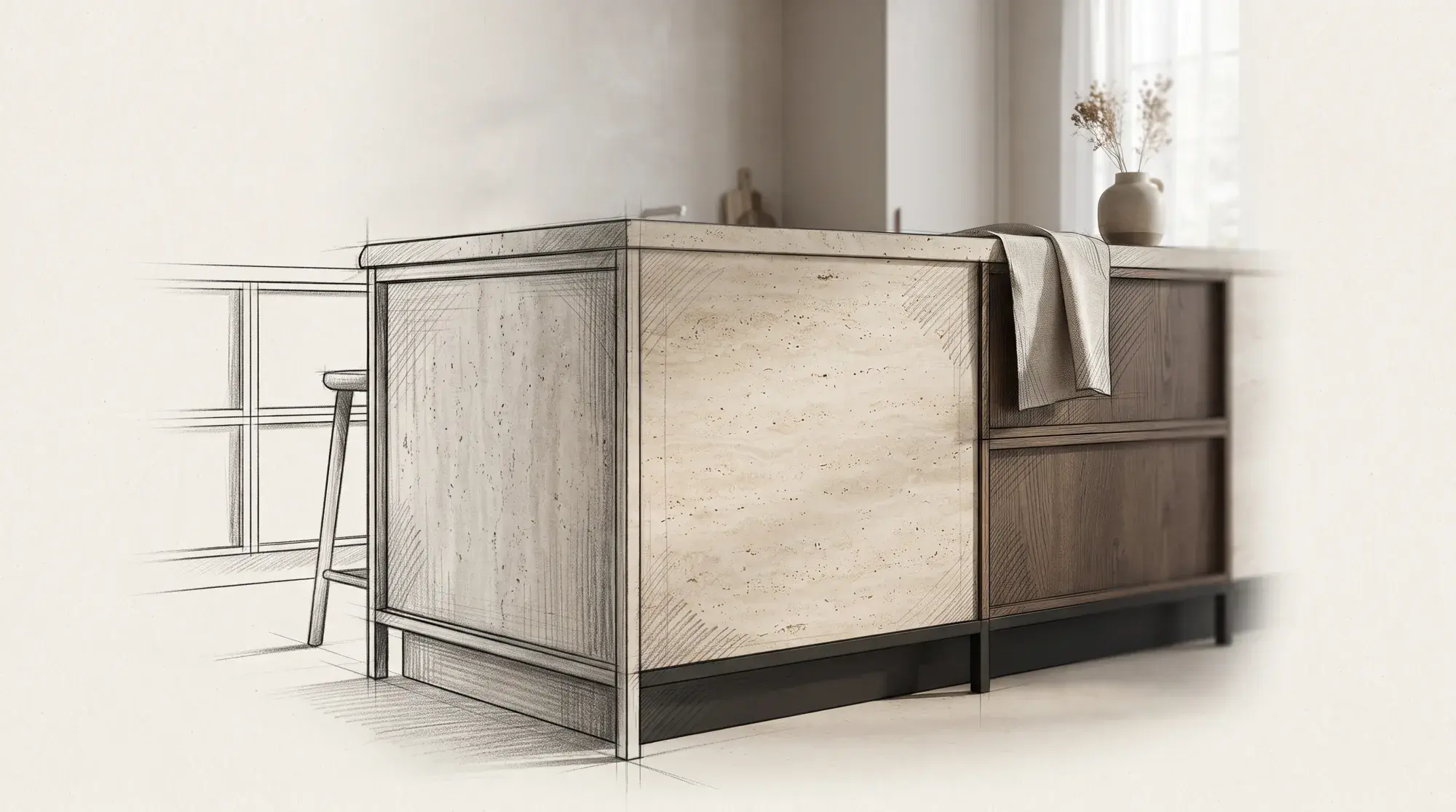
With their warm texture and timeless look, travertine and marble are among the most popular natural stones in villa and residential projects. They age beautifully on floors, in bathrooms, on fireplaces and as wall cladding; but because they contain calcium carbonate, their surfaces can dull on contact with lemon, vinegar and acidic cleaners. Used in the right place and cleaned with neutral products, they last for decades.
What is travertine, and how is it different from marble?
Travertine is a stone with natural pores, formed from limestone deposited by spring water. Marble forms when limestone recrystallises under heat and pressure, and has a denser structure. Both belong to the calcareous (calcium carbonate based) group of stones, so their care rules are similar. Travertine's pores can be filled or left natural.
Where is it used at home?
- Floors: in living rooms, halls and terraces, with its warm tone and matt surface
- Bathrooms: as wall and floor cladding, and on vanity tops (with careful use)
- Fireplaces and feature walls: as a focal point, with its texture and depth
- Furniture: on coffee tables, consoles and table tops
- Outdoors: around pools and on terraces (with frost-resistant types and a suitable finish)
Can travertine or marble be used in the kitchen?
Yes, but knowingly. According to the Natural Stone Institute's care guide, lemon, vinegar or other acidic products can dull or etch calcareous stones, and abrasive powders can scratch the surface (Natural Stone Institute). For lower maintenance, quartz or sintered surfaces are an easier alternative. We also cover this in our kitchen renovation guide.
How do you care for natural stone?
- Use a pH-neutral stone cleaner or warm water with a little mild soap.
- Blot spills rather than wiping, straight away; then rinse with water.
- Avoid acidic limescale removers, mixtures of bleach and ammonia, and abrasive powders.
- Ask the installer how often the sealer should be renewed.
The Natural Stone Institute stresses that sealing does not make stone stain-proof; it only increases its resistance to stains. If acid has etched the surface, a stone restoration specialist should be called to re-polish it (Natural Stone Institute).
“Natural stone is chosen not to be flawless, but to age beautifully.”
Conclusion
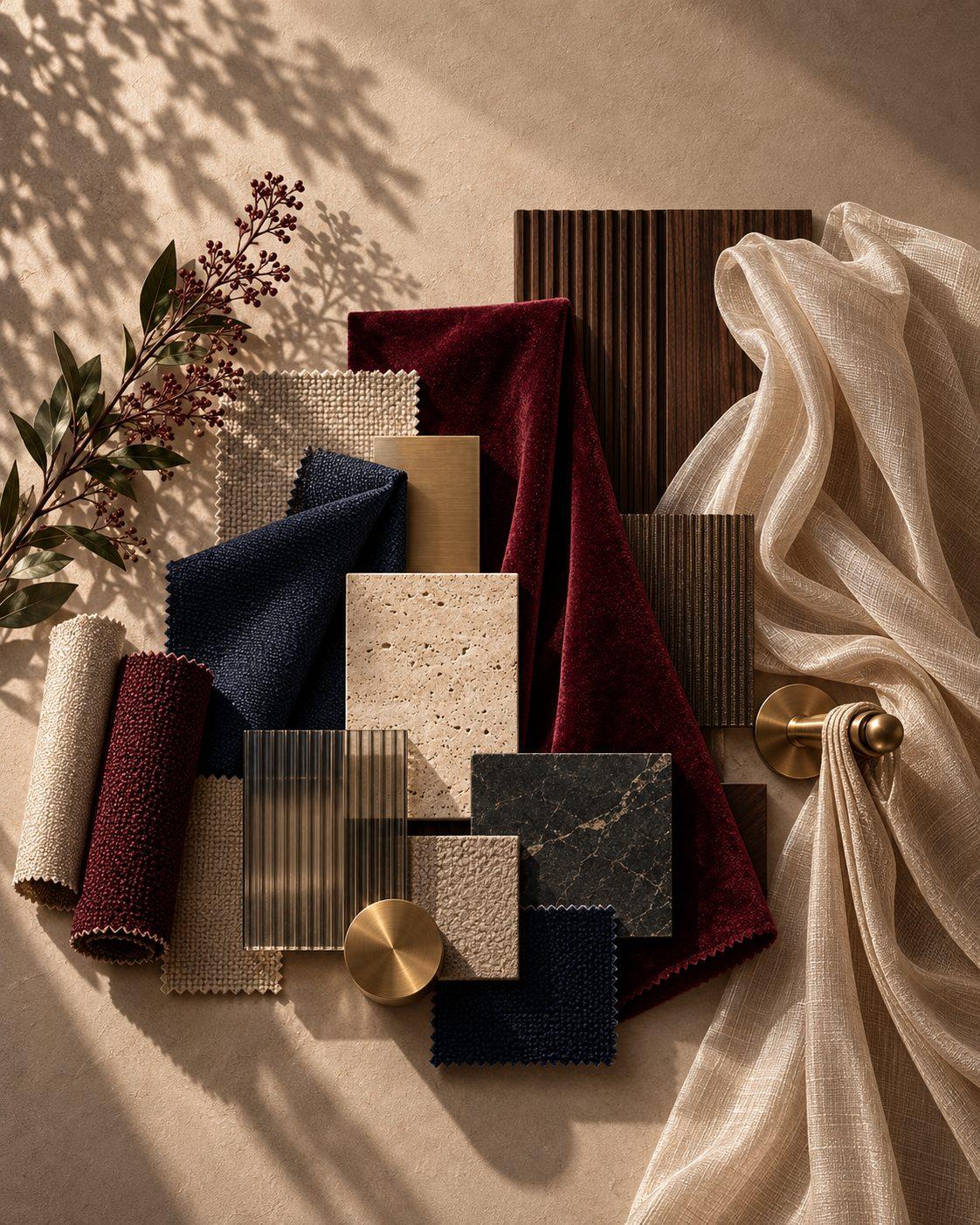
In the right place and with the right care, travertine and marble give a space character for years. We are with you in choosing materials and matching them with wood, metal and fabric through our interior design service. We also describe a warm material language in our article on burgundy, brass and travertine.
Frequently asked questions
Is a travertine floor slippery?
Polished travertine can be slippery when wet. Honed, brushed or tumbled finishes are preferred in bathrooms and outdoors.
What happens if lemon juice is spilled on marble?
Acid can dull (etch) the marble's surface. Blot it straight away and rinse with water; if a mark remains, a stone restoration specialist can re-polish the surface.
Does sealing make natural stone stain-proof?
No. Sealing increases resistance to stains but does not make the stone completely stain-proof.
From the Journal
All articles →- Materials
· 3 min read
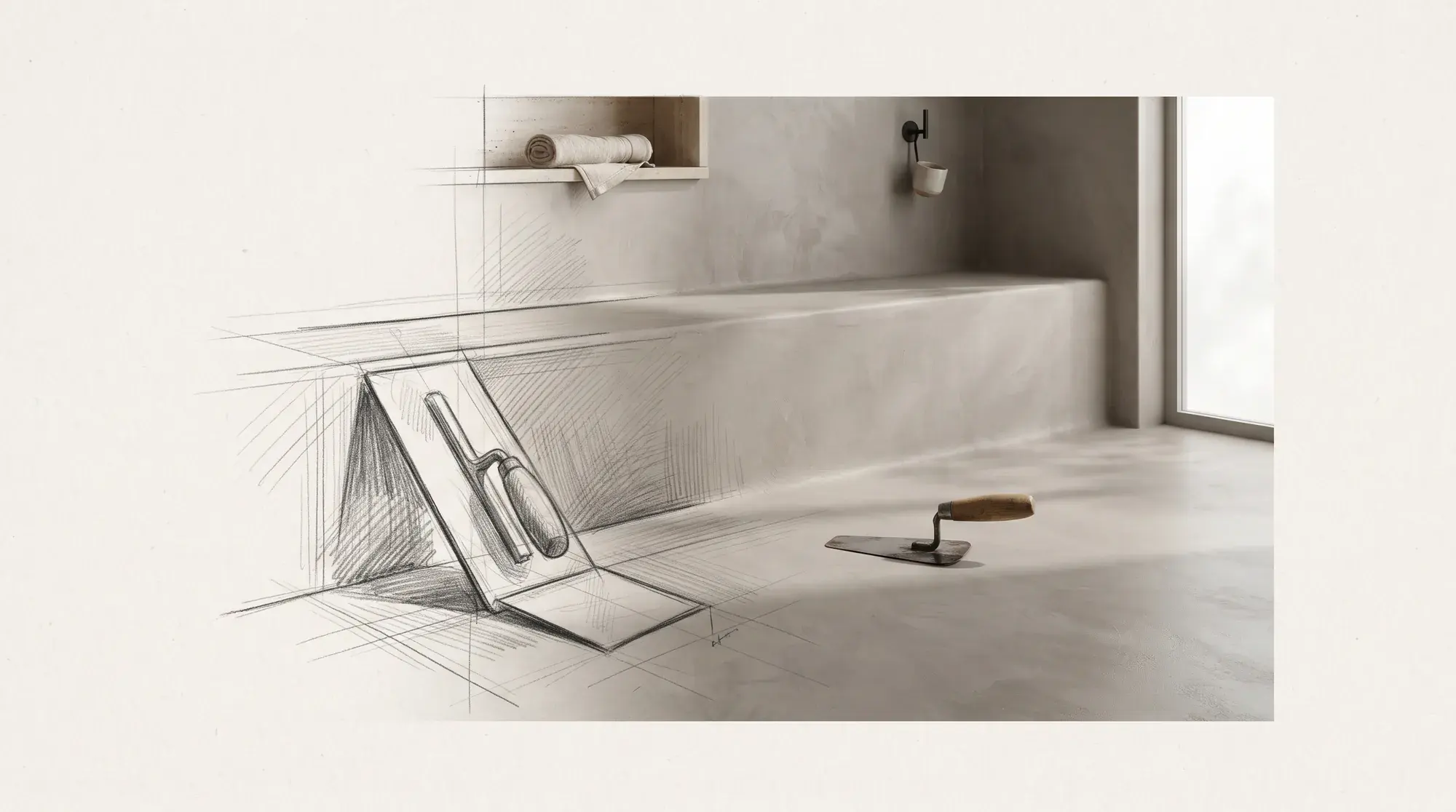
What is microcement? Pros, cons and where to use it
Microcement is the material behind seamless floors and one-piece bathrooms. How it is applied, where it works and what to watch out for.
- Materials

· 3 min read
Choosing flooring: solid wood, engineered wood, SPC, tiles and microcement
Which floor suits which room? We compare floor finishes for durability, water resistance, sound, underfloor heating and look.
- Materials
· 3 min read
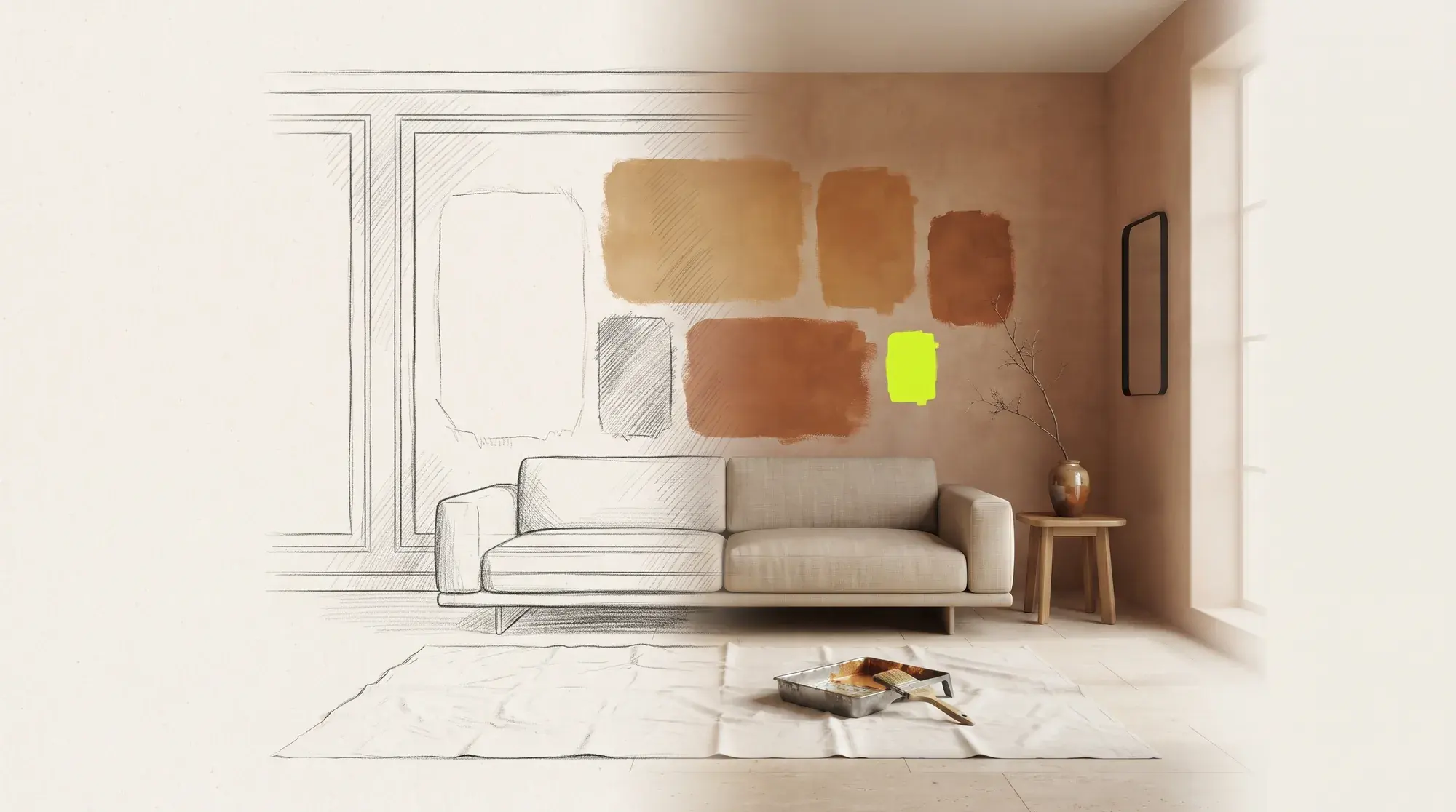
How to choose a wall colour: an interior paint guide
Light, orientation, materials and use: how to choose the right wall colour, sheen levels, low-VOC paints and why testing matters.