Architecture
Garden and landscape design: making a villa's outdoor space part of the home
· 3 min read · SG Concept Architecture
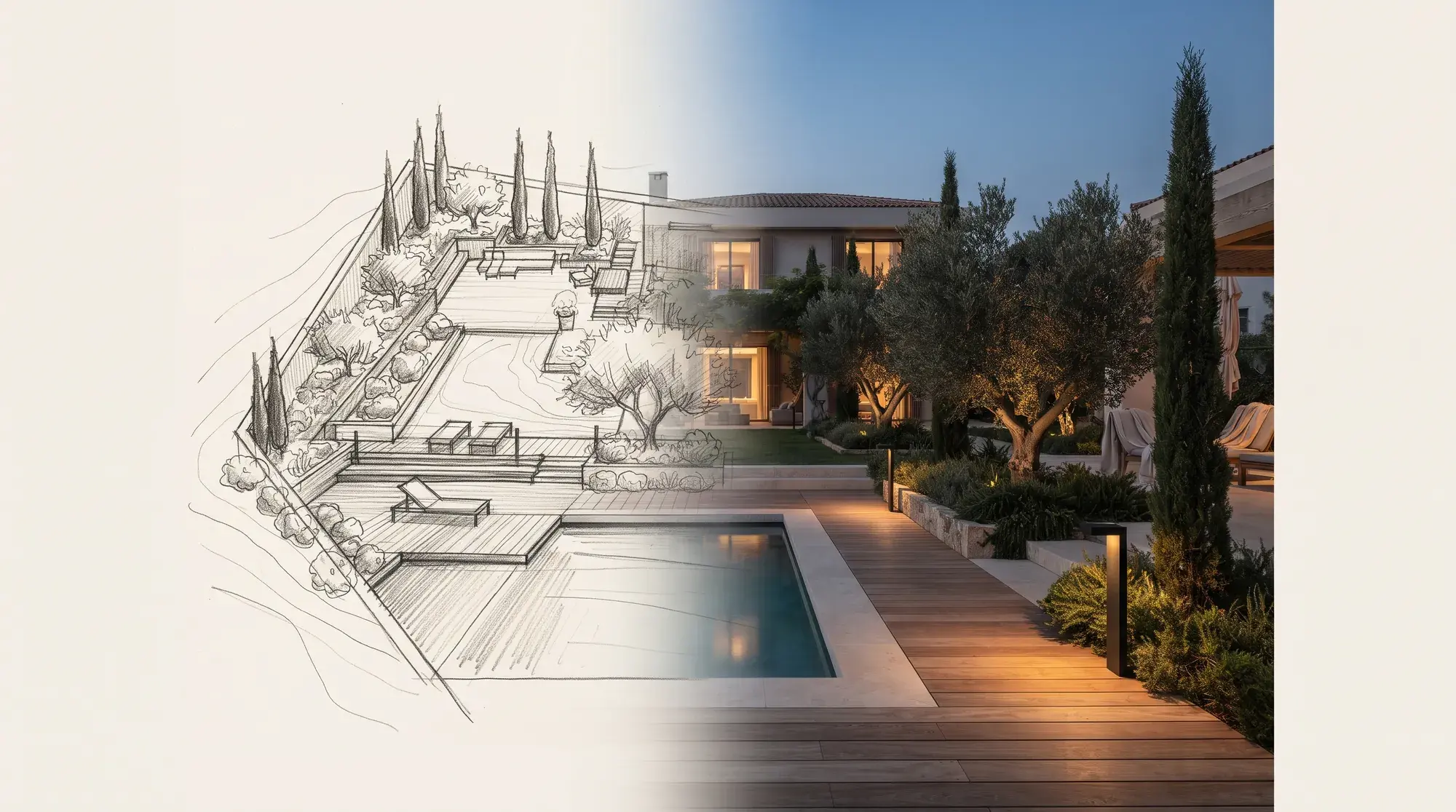
Garden and landscape design means planning the terraces, courtyard, paths, pool surround, planting, irrigation and outdoor lighting around a building as one setting in harmony with the home's architecture. A well-designed garden does not add square metres to the house, but it adds living space: when the material, colour and light language used inside continues outside, the house and garden read as one.
Where does landscape design start?
- Reading the site: level changes, sun and wind direction, view, existing trees and soil.
- Use scenario: dining, relaxing, children's play, pool, vegetable garden, pets.
- Zoning: active areas near the house, calm and natural areas further away.
- Maintenance expectations: how many hours a week do you want to spend on the garden?
Turning level changes into an advantage
Sloping sites look like a difficulty, but planned well they give the garden layers and depth. Terracing, garden steps and seating walls turn the slope into usable flat areas. In hilly areas near the forest such as Göktürk and Kemerburgaz, this is an often-needed solution.
An example: HS House
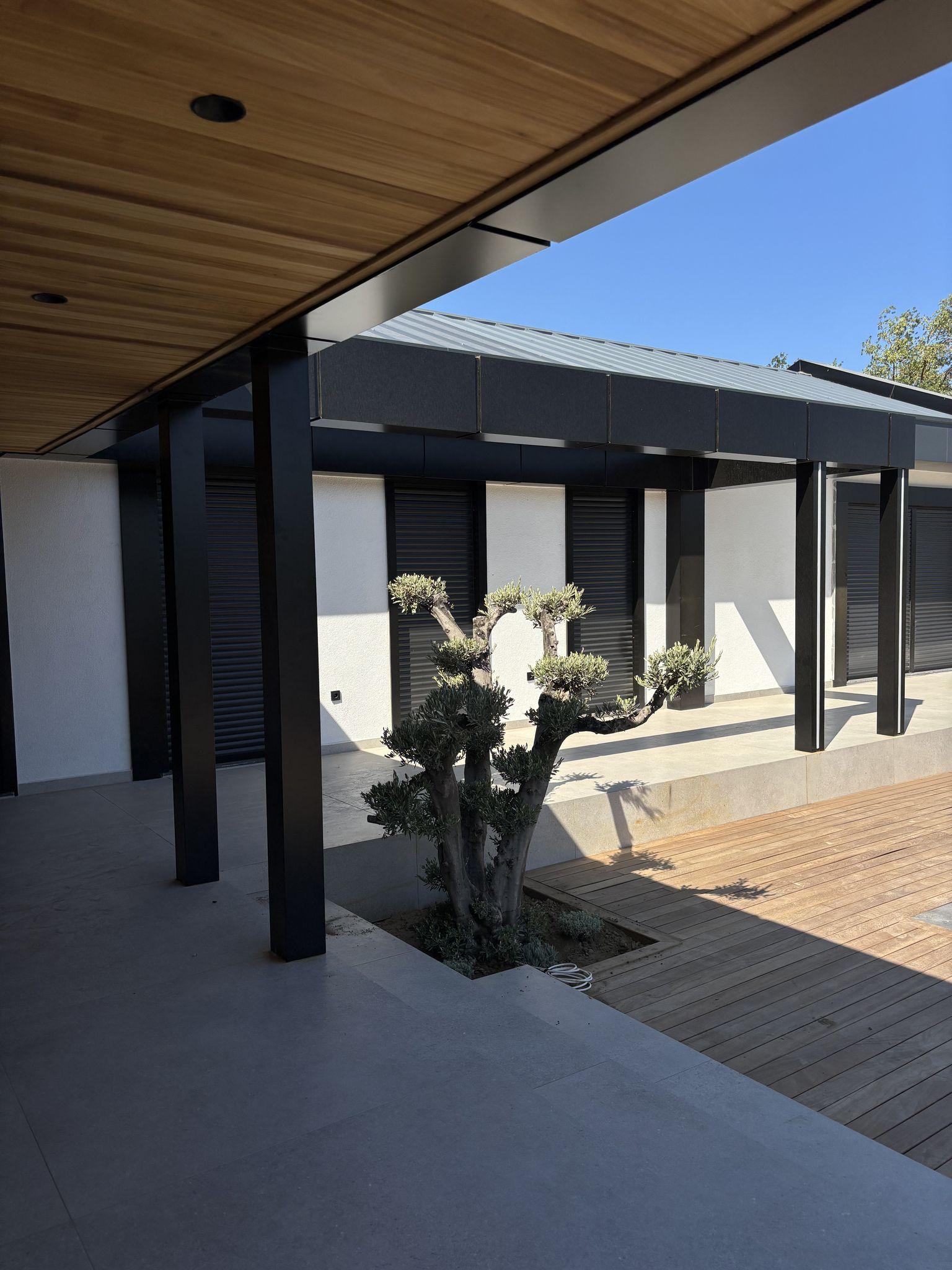
In our HS House project in Çakırlar, Düzce, we treated the outdoor space as a second layer in harmony with the existing building's architecture. We balanced the strong geometry of the black frames with the warmth of timber decking and layered planting. We tied the courtyard, pool surround and garden steps together in the same material and colour scheme, and created a Mediterranean, low-maintenance planting language with olive trees, cypresses and shrub forms.
Plant choice and irrigation
Plants adapted to the local climate that need little water reduce both maintenance and water use. According to the EPA, the average U.S. household uses more water outdoors than for showering and washing clothes combined (U.S. EPA WaterSense). Grouping plants by water need and using drip irrigation and timer systems keep this consumption under control.
Decking, stone and hard surfaces
Timber or composite decking gives a warm, soft walking surface; natural stone and concrete pavers need less maintenance. Around a pool, choose surfaces that are non-slip and do not overheat in the sun. Where rainwater will drain is as important as the choice of surface.
Night lighting
Garden lighting does three jobs: safety, wayfinding and atmosphere. When steps, paths, tree trunks and wall surfaces are each highlighted with low-level, warm-toned light, the garden can be used at night too. Avoiding glaring, upward-facing floodlights protects both the neighbours and the night sky.
“The garden is the room of the house whose ceiling is the sky.”
Conclusion
Considered together with the home's architecture, landscape design raises the value of the investment and the quality of time spent at home. We run outdoor projects from design to build through our architecture and build services. We describe the whole villa project in our villa project guide.
Frequently asked questions
When should garden design start?
Ideally together with the house design. If levels, drainage, irrigation and outdoor lighting infrastructure are prepared during construction, later digging and costs are reduced.
How do you make a low-maintenance garden?
By choosing climate-suited plants that need little water, grouping plants by water need, using drip irrigation, and planning ground cover and hard surfaces instead of large lawns.
Timber decking or stone?
Timber decking feels warm and soft but needs regular maintenance. Natural stone and concrete pavers need less. A non-slip surface is essential around a pool.
From the Journal
All articles →- Architecture
· 3 min read
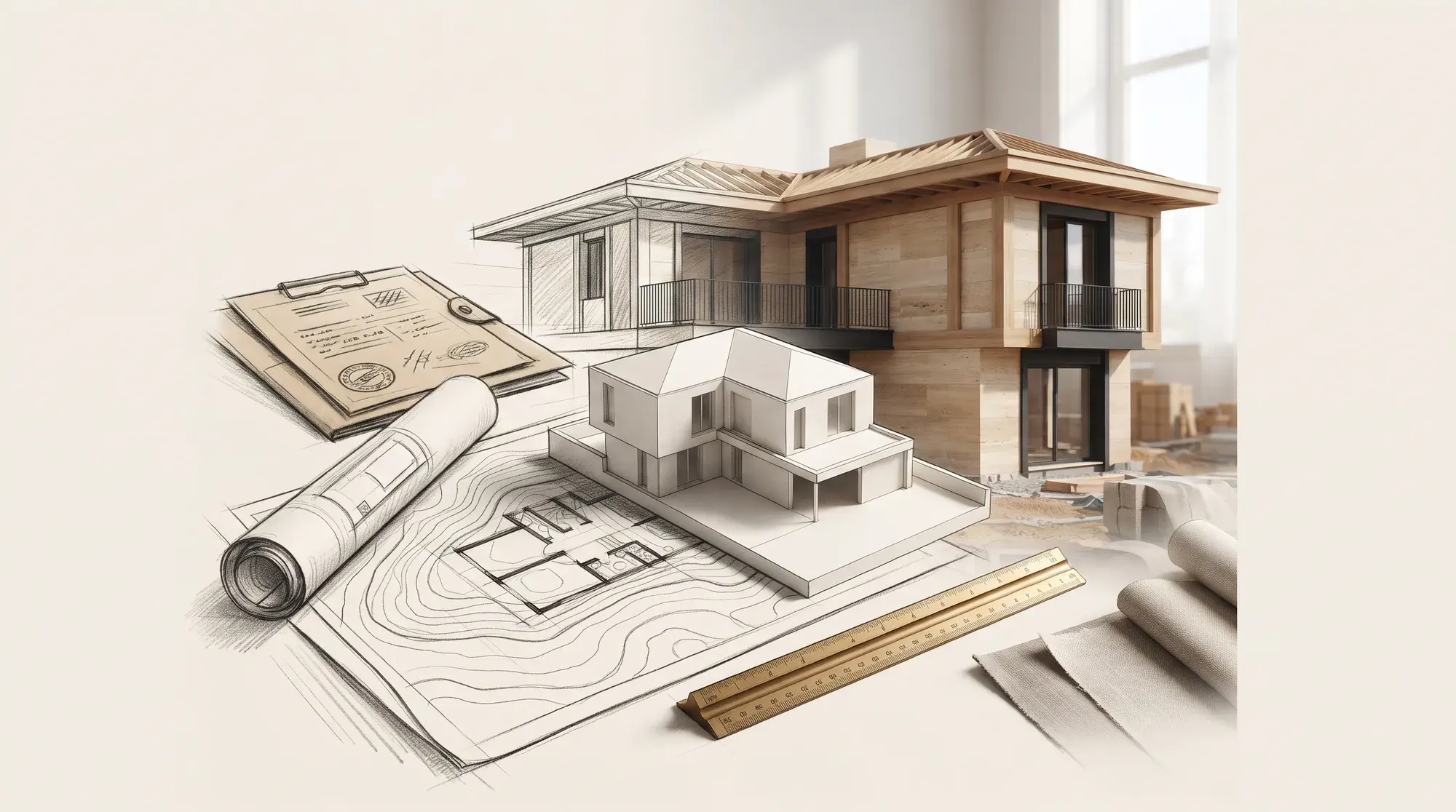
How to get a building permit in Türkiye: documents, process and occupancy permit
What to know before building a villa or detached house: the permit requirement under the Zoning Law, application documents, legal time limits, work that needs no permit, and the occupancy permit.
- Architecture
· 3 min read
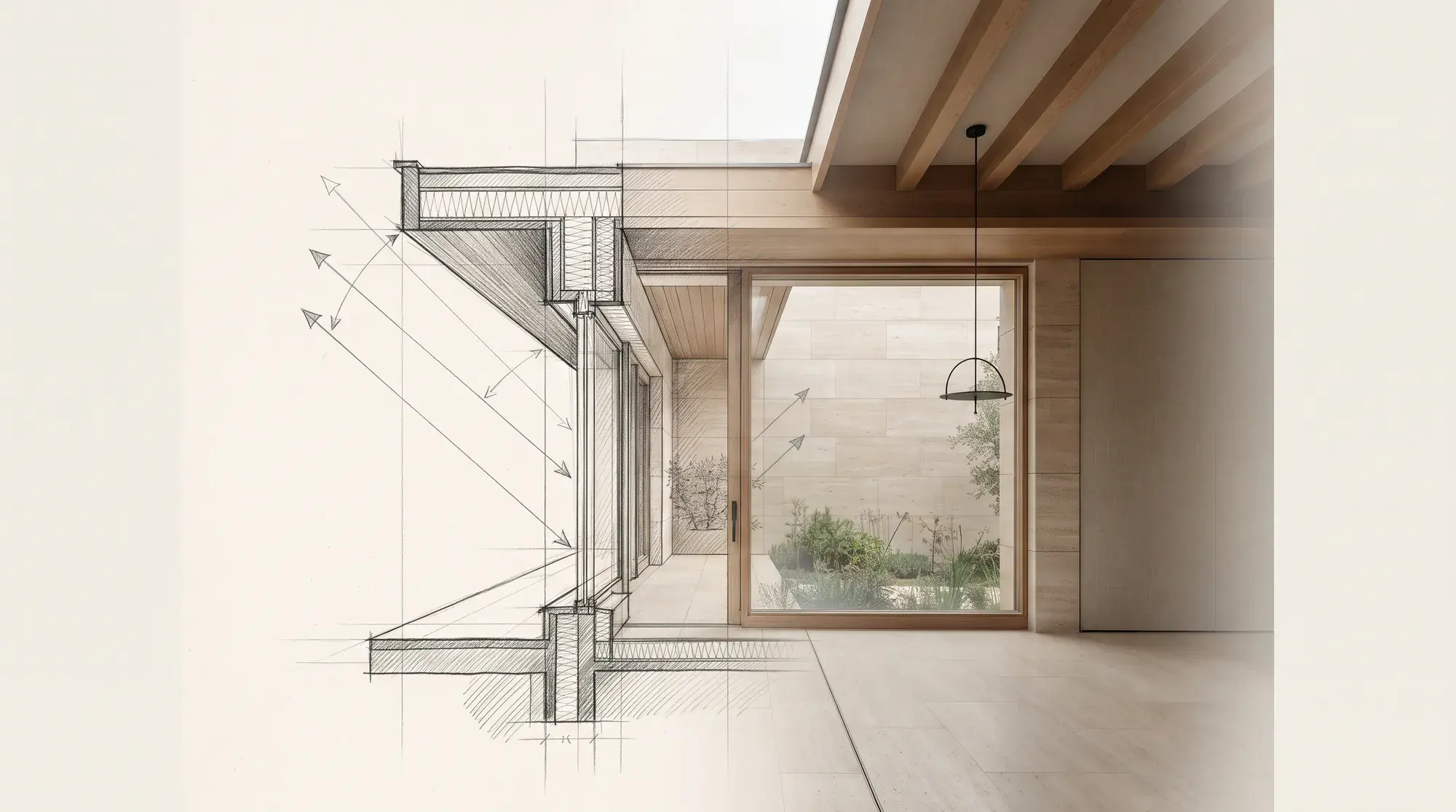
Energy-efficient homes in Türkiye: insulation, windows, heating and the Energy Performance Certificate
What is the Energy Performance Certificate (EKB) and what is it for? How to reduce a home's energy demand through design, including the 2026 regulation change.
- Architecture
· 3 min read
Villa facade design: exterior cladding materials and how to choose
Stone, wood, render, composite and glass: material choice for a villa facade, its relationship with insulation, maintenance needs and the effect of climate.